How to Store Chocolate Bark
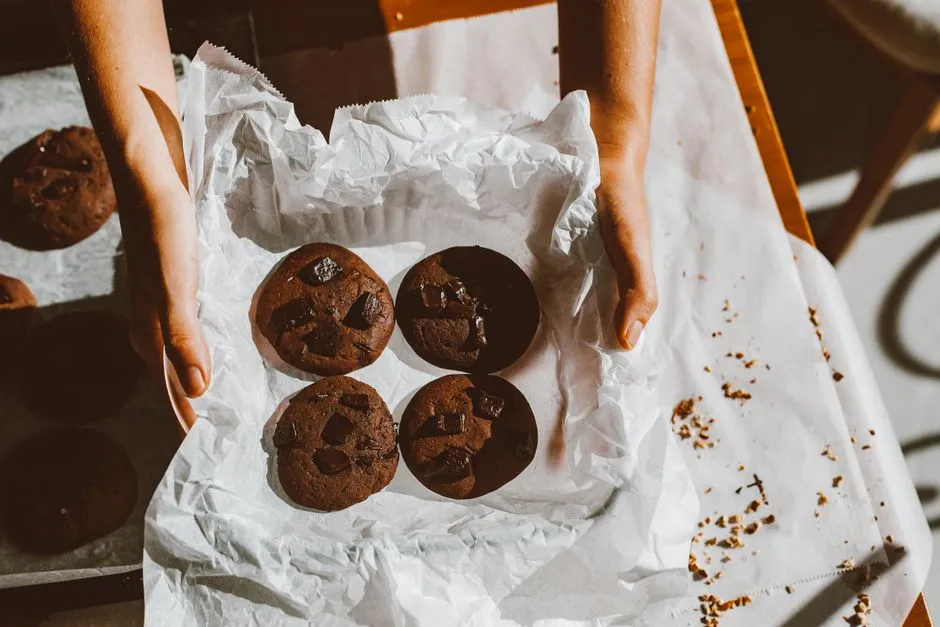
- Store dry chocolate bark airtight in a cool, dry place
- Assess the whole bark, not just the chocolate
- Choose room storage only when every topping allows it
- Pack it only after it is fully set
- Refrigerate bark when an ingredient requires it
- Treat freezing as a recipe-specific choice
- Set the duration from evidence you actually have
- Label allergens before gifting or sharing
- Distinguish bloom from spoilage
- Sources
Store dry chocolate bark airtight in a cool, dry place
Chocolate bark made only with chocolate and dry, shelf-stable toppings belongs in airtight, odor-free packaging in a cool, dry, dark place. Bark containing fresh fruit, cream, soft cheese, or another ingredient that requires refrigeration follows the rule for that perishable ingredient instead. There is no honest universal storage duration: the chocolate, toppings, recipe, room conditions, and handling history all set the limit.
Before packing the bark, let it set completely. Record what went into it, choose the storage route, and mark the package with the preparation date and allergens. A good container protects the snap; an accurate label protects the person opening it.
Assess the whole bark, not just the chocolate
Start with every component. Plain chocolate behaves differently from a slab scattered with roasted nuts, pretzels, freeze-dried berries, soft caramel, fresh fruit, or dairy filling.
| What is in the bark? | Storage starting point | Main limit |
|---|---|---|
| Chocolate plus dry, shelf-stable toppings | Cool, dry room storage | Heat, humidity, odors, light, and the shortest quality life among the ingredients |
| A topping whose package says refrigerate after opening | Refrigeration | That ingredient's label and the tested recipe |
| Fresh fruit, cream, soft cheese, or another perishable ingredient | Refrigeration promptly | Food-safety guidance for the most perishable component |
| Unknown ingredients or uncertain time at room temperature | Do not guess | Discard when safety or allergen history cannot be established |
The word “dry” needs evidence, not optimism. Check each original package. Dried fruit can be shelf-stable, but fresh fruit is not the same ingredient. A crisp cookie may soften long before the chocolate deteriorates. Nuts introduce oils that can develop stale flavors; Hershey notes that nuts shorten the shelf life of its confectionery products.
If the bark came from someone else, ask for its ingredients, preparation date, and storage instructions. Do not infer safety from a glossy surface or a neat gift box.
Choose room storage only when every topping allows it
Callebaut's professional storage guidance gives 12 to 18°C (54 to 64°F) as the ideal range for pure chocolate and a maximum relative humidity of 70% for chocolate products. It also recommends protection from light, drafts, and strong odors. Those are quality-control conditions, not a promise that every homemade bark is safe or fresh for a fixed number of days.
Many homes are warmer than that ideal range. If the chosen cupboard regularly exceeds it, chocolate may soften and lose gloss. Moving bark repeatedly between a warm room and cold refrigerator creates temperature shocks and condensation risk. Choose the most stable suitable location rather than commuting the package twice a day.
Keep bark away from a sunny counter, oven, dishwasher vent, radiator, and the top of a refrigerator. A pantry beside spices, coffee, onions, or cleaning products is also a poor choice. Chocolate absorbs odors, and an airtight box cannot compensate for being opened repeatedly in a strongly scented space.
The site's small-batch chocolate bark uses 300 g chocolate and no more than 60 g dry toppings. Its dry-topping design suits cool-room storage when each chosen topping is independently shelf-stable.
Pack it only after it is fully set
Packing warm or partly set bark traps moisture and presses fingerprints into the surface. Let the slab become firm in the conditions specified by the recipe. Use clean, dry hands or utensils, then break or cut it before packing so the container does not need repeated handling.
Choose a clean, dry, food-safe container with a tight seal. Callebaut recommends sturdy, odor-free packaging that is airtight and, if possible, protects the chocolate from light. A shallow rigid box prevents the pieces from being crushed better than a loose bag.
Place parchment between layers. Stack broad pieces flat and avoid overfilling the container; pressure can drive toppings into the layer below or snap thin shards. Do not use a paper towel against the chocolate, because it can adhere to soft areas and does not create a moisture barrier.
Pack different allergen profiles separately. Putting nut-free pieces in the same box as nut-topped bark makes the shared box unsuitable for someone avoiding those nuts. Separate packaging after contact does not undo cross-contact that already occurred on tools, trays, or hands.
Refrigerate bark when an ingredient requires it
Refrigeration is a food-safety decision when bark contains a perishable topping; it is not the preferred quality environment for plain chocolate. The FDA says foods requiring refrigeration should be chilled promptly, should not remain at room temperature for more than two hours, or more than one hour when the air temperature is above 90°F (32°C), and should be held at or below 40°F (4°C).
Those limits apply to the perishable ingredient, even when it is surrounded by chocolate. Chocolate does not turn fresh fruit or dairy into a shelf-stable food. Follow the tested recipe's duration and the shortest applicable instruction among the ingredients. If no reliable recipe or storage instruction establishes a safe duration, do not invent one for gifting or later service.
Refrigerated bark needs a tight, odor-free package because refrigerators are humid and full of aromas. Keep it away from raw foods and leaking packages. Do not crowd containers so tightly that cold air cannot circulate.
Before serving, keep the package closed while the bark warms gradually toward room temperature. Callebaut advises allowing packaged chocolate products to reach room temperature before opening; this reduces condensation on the chocolate. Once opened, serve the perishable bark within its safe time out of refrigeration rather than returning a handled platter to long storage.
Treat freezing as a recipe-specific choice
Freezing is not the default answer for delicate bark. Chocolate, nuts, cookies, candy, and dried fruit respond differently to freezing and thawing, while moisture can dull the surface or soften crisp toppings. Without a tested recipe for that exact combination, freezing is an experiment in quality rather than a dependable extension of storage life.
If a verified recipe permits freezing, wrap portions airtight, protect them in a rigid container, label them, and thaw the closed package as directed. Do not open frozen chocolate into warm, humid air. Discard a perishable batch if its temperature history falls outside its safety guidance; freezing later does not erase earlier unsafe holding.
Set the duration from evidence you actually have
A manufacturer's date on a chocolate bar describes that unopened product under its specified storage conditions. It does not automatically become the date for bark after melting, handling, and adding toppings. Likewise, the longest-lived ingredient cannot extend the life of the shortest-lived one.
For a home batch, write down:
- the preparation date;
- the chocolate and every topping used;
- the storage route and temperature requirement;
- the earliest relevant package instruction or tested-recipe limit;
- the allergens and known cross-contact;
- a conservative quality check for texture, odor, and flavor.
Use the earliest applicable limit. For dry bark with no published duration, make it close to when it will be eaten and judge quality regularly rather than printing an unsupported date. For perishable bark, safety rules and a tested recipe control; sensory checks cannot prove that unsafe bacteria are absent.
Label allergens before gifting or sharing
Read the current label on every ingredient every time. FDA identifies nine major food allergens in the United States: milk, egg, fish, crustacean shellfish, tree nuts, wheat, peanuts, soy, and sesame. Chocolate commonly introduces milk or soy; toppings can add nuts, peanuts, wheat, or sesame.
For a homemade gift, attach a complete ingredient list, name specific tree nuts, state the preparation date and storage instruction, and describe known cross-contact honestly. Do not call bark “allergen-free” because one ingredient lacks an allergen. The chocolate, toppings, equipment, parchment, hands, and storage box all matter.
If the ingredient record is incomplete, do not offer the bark to someone with a food allergy. A decorative ribbon is not an allergen control.
Distinguish bloom from spoilage
A pale or grey film can be fat bloom after heat exposure or sugar bloom after condensation. Hershey says bloomed chocolate remains safe to use but may have changed flavor or texture. That observation does not clear toppings with unknown age, mold, off odors, pest exposure, or an unsafe temperature history.
Discard bark with mold, contamination, rancid or otherwise suspicious odor, unidentified ingredients, or compromised perishable storage. Do not taste a questionable batch to decide whether it is safe.
For sound dry bark, the storage plan is simple: set it fully, pack it airtight with parchment between layers, keep it cool, dry, dark, and odor-free, and label what is actually inside. Change that plan only when a topping gives you a concrete reason.